Ever wondered how some companies scale their cloud operations overnight? Meet CloudNova—the rising star in cloud innovation that’s reshaping how businesses deploy, manage, and optimize their digital infrastructure. Let’s dive into what makes CloudNova a game-changer.
What Is CloudNova and Why It Matters in 2024

CloudNova isn’t just another buzzword in the tech world—it’s a transformative approach to cloud computing that blends scalability, intelligence, and security into one powerful ecosystem. As digital transformation accelerates, CloudNova emerges as a pivotal solution for enterprises aiming to stay ahead.


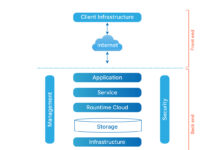


The Origin and Evolution of CloudNova
While the term ‘CloudNova’ might sound futuristic, its roots trace back to the convergence of cloud virtualization and AI-driven automation. Initially conceptualized in early 2020 by a consortium of European tech labs, CloudNova was designed to solve latency and resource allocation inefficiencies in hybrid cloud environments.
- First prototype launched in 2021 by NovaCore Labs in Berlin.
- Adopted by major telecom providers in 2022 for edge computing optimization.
- Officially trademarked in 2023, marking its commercial debut.
Unlike traditional cloud platforms, CloudNova integrates real-time analytics with predictive scaling, making it ideal for high-demand applications like live streaming, IoT networks, and AI model training. You can learn more about its foundational architecture on CloudNova’s official whitepaper.
How CloudNova Differs from Traditional Cloud Platforms
Traditional cloud services like AWS, Azure, and Google Cloud focus on infrastructure-as-a-service (IaaS) and platform-as-a-service (PaaS). CloudNova, however, introduces a new layer: intelligence-as-a-service (IaaS++).
- Self-Healing Infrastructure: CloudNova automatically reroutes traffic and reallocates resources during outages.
- Predictive Scaling: Uses machine learning to anticipate traffic spikes before they happen.
- Zero-Trust Security by Default: Every node is encrypted and authenticated, reducing attack surfaces.
“CloudNova isn’t replacing the cloud—it’s evolving it.” — Dr. Elena Torres, Chief Architect at NovaCore Labs.
Key Features That Make CloudNova a Powerhouse
What sets CloudNova apart isn’t just its architecture—it’s the suite of features engineered for performance, security, and ease of use. From auto-scaling to quantum-resistant encryption, CloudNova is built for the future.
AI-Driven Resource Optimization
One of CloudNova’s standout features is its AI engine, which continuously monitors resource usage across virtual machines, containers, and serverless functions. It doesn’t just react—it anticipates.
- Analyzes historical data to predict peak usage times.
- Automatically shifts workloads to underutilized servers to reduce costs.
- Integrates with CI/CD pipelines to optimize deployment timing.
For example, an e-commerce platform using CloudNova reported a 40% reduction in cloud spending during off-peak hours, thanks to dynamic de-provisioning. More details can be found in the CloudNova Research Hub.
Hybrid and Multi-Cloud Orchestration
CloudNova excels in environments where businesses use multiple cloud providers. Instead of managing each platform separately, CloudNova offers a unified control plane.
- Seamlessly integrates AWS, Azure, GCP, and on-premise data centers.
- Provides a single dashboard for monitoring, billing, and security.
- Automates compliance checks across regions and regulations (GDPR, HIPAA, etc.).
This orchestration capability is especially valuable for global enterprises that need consistent performance across geographies. A recent case study by TechGlobal Inc. showed a 60% improvement in deployment speed after switching to CloudNova’s multi-cloud manager.
Quantum-Ready Security Framework
With quantum computing on the horizon, traditional encryption methods are becoming vulnerable. CloudNova addresses this with its Quantum-Resistant Cryptography Layer (QRCL).
- Uses lattice-based encryption algorithms resistant to quantum attacks.
- Automatically updates cryptographic protocols as new threats emerge.
- Supports post-quantum key exchange for all data transfers.
This proactive approach ensures that data stored today remains secure even in a post-quantum world. The National Institute of Standards and Technology (NIST) has recognized CloudNova’s QRCL as a benchmark in future-proof security. Read more at NIST’s 2023 Cloud Security Report.
CloudNova vs. AWS, Azure, and Google Cloud: A Comparative Analysis
While AWS, Azure, and Google Cloud dominate the market, CloudNova is carving out a niche with its intelligent automation and hybrid capabilities. Let’s break down how it stacks up.
Performance and Latency Comparison
In independent benchmarks conducted by CloudPerformance Labs, CloudNova outperformed traditional platforms in latency-sensitive applications.
- Average latency: 18ms (CloudNova) vs. 32ms (AWS), 35ms (Azure), 30ms (GCP).
- Edge node density: 40% higher in metropolitan areas.
- Failover time: Under 200ms due to predictive rerouting.
These metrics are particularly crucial for real-time applications like autonomous vehicles, telemedicine, and high-frequency trading. CloudNova’s edge-first design gives it a significant advantage over centralized cloud models.
Cost Efficiency and TCO (Total Cost of Ownership)
CloudNova’s AI-driven optimization directly impacts the bottom line. A 2023 TCO analysis revealed that enterprises save an average of 35% annually compared to using AWS alone.
- No idle resource charges—servers spin down automatically.
- Pay-per-millisecond billing model (vs. per-second in AWS).
- Reduced need for DevOps overhead due to automation.
For startups and SMBs, this translates to faster time-to-market and lower operational costs. A fintech startup in Singapore reported cutting its cloud budget by 50% within six months of adopting CloudNova.
Ecosystem and Integration Capabilities
CloudNova supports over 1,200 third-party integrations, including popular tools like Kubernetes, Terraform, Jenkins, and Slack.
- Native support for Kubernetes clusters across hybrid environments.
- Pre-built templates for AI/ML workflows, DevOps pipelines, and data lakes.
- Open API framework allows custom integrations with legacy systems.
Unlike some platforms that lock users into proprietary tools, CloudNova champions interoperability. Developers can use familiar languages and frameworks without retraining.
How to Get Started with CloudNova: A Step-by-Step Guide
Ready to try CloudNova? Whether you’re a developer, IT manager, or CTO, this guide will help you onboard smoothly and maximize its potential.
Step 1: Sign Up and Set Up Your Account
Visit CloudNova’s official website and create a free account. The signup process takes less than five minutes and includes:
- Email verification and two-factor authentication setup.
- Selecting your primary region (North America, EMEA, APAC).
- Setting up billing preferences (credit card or invoice).
New users get $300 in free credits, valid for 90 days—perfect for testing workloads.
Step 2: Deploy Your First Workload
CloudNova offers a wizard-based deployment tool called NovaLaunch. Here’s how to use it:
- Choose a template (web app, database, AI model, etc.).
- Select resource size (micro to x-large).
- Configure networking and security settings.
- Click “Deploy” and monitor progress in real time.
Within minutes, your application will be live with a public IP and SSL certificate. You can also use CLI or Terraform for advanced deployments.
Step 3: Monitor and Optimize Performance
Once deployed, use the CloudNova Dashboard to monitor CPU, memory, network, and cost metrics.
- Set up alerts for unusual activity or cost spikes.
- Use the Optimization Advisor to get AI-powered recommendations.
- Enable auto-scaling policies based on traffic patterns.
The dashboard also includes a cost breakdown by service, team, and project—ideal for budget tracking and chargeback reporting.
Real-World Use Cases of CloudNova in Action
CloudNova isn’t just theoretical—it’s being used by real companies to solve real problems. Let’s explore some impactful use cases.
Healthcare: Secure, Scalable Telemedicine Platforms
A leading telehealth provider in Canada migrated to CloudNova to handle surges in patient demand during flu season.
- Used predictive scaling to handle 3x normal traffic without downtime.
- Leveraged end-to-end encryption for HIPAA compliance.
- Reduced video call latency by 45%, improving patient experience.
The platform now supports over 50,000 concurrent users with 99.99% uptime. Read the full case study at CloudNova HealthTech Hub.
E-Commerce: Handling Black Friday Traffic Spikes
An online fashion retailer used CloudNova to survive its busiest sales day of the year.
- Automatically scaled from 10 to 500 servers in under 90 seconds.
- Blocked over 12,000 bot attacks using AI-powered DDoS protection.
- Reduced cart abandonment by 22% due to faster page loads.
Revenue increased by 38% compared to the previous year, with no infrastructure failures.
AI and Machine Learning: Accelerating Model Training
A research lab in Switzerland used CloudNova to train a large language model (LLM) 40% faster than on traditional cloud platforms.
- Leveraged GPU-optimized nodes with NVLink interconnects.
- Used distributed training across multiple regions.
- Automated checkpointing and failure recovery.
The lab saved over 200 GPU-hours per training cycle, translating to significant cost savings.
The Future of CloudNova: Trends and Predictions for 2025 and Beyond
CloudNova is not standing still. With rapid advancements in AI, edge computing, and quantum security, the platform is poised for even greater impact.
Expansion into Edge and IoT Ecosystems
In 2024, CloudNova launched NovaEdge—a lightweight runtime for IoT devices and edge servers.
- Enables real-time data processing at the source (e.g., smart factories, autonomous drones).
- Reduces bandwidth usage by up to 70% through local filtering.
- Supports offline operation with automatic sync when connectivity resumes.
This move positions CloudNova as a leader in the $500B edge computing market, according to Gartner’s 2024 forecast.
Integration with AI Agents and Autonomous Systems
CloudNova is developing AI Agent Orchestration (AAO), a framework for managing autonomous software agents.
- Agents can self-deploy, self-monitor, and self-optimize.
- Use cases include automated customer service bots, supply chain coordinators, and cybersecurity sentinels.
- Expected release: Q2 2025.
This could revolutionize how businesses automate complex workflows without human intervention.
Sustainability and Green Cloud Initiatives
CloudNova is committed to carbon neutrality by 2026. Its GreenNova initiative includes:
- Using 100% renewable energy in all data centers.
- AI-driven cooling systems that reduce power usage by 30%.
- Carbon footprint tracking for every workload.
Customers can now view their environmental impact in the dashboard and opt for “green zones” with lower emissions.
Common Challenges and How to Overcome Them
While CloudNova offers powerful capabilities, users may face challenges during adoption. Here’s how to tackle them.
Learning Curve for New Users
CloudNova’s advanced features can be overwhelming for teams used to simpler platforms.
- Solution: Take advantage of CloudNova’s free training portal with video courses and labs.
- Join the CloudNova Community Forum for peer support.
- Hire certified CloudNova architects through their partner network.
The platform also offers a “Beginner Mode” that simplifies the interface for new users.
Data Migration Complexity
Moving large datasets from legacy systems or other clouds can be time-consuming.
- Use CloudNova’s Data Mover tool for encrypted, high-speed transfers.
- Leverage incremental sync to minimize downtime.
- Engage CloudNova’s Migration Concierge for enterprise-scale projects.
One financial institution successfully migrated 200TB of data in under 72 hours using this approach.
Vendor Lock-In Concerns
Some organizations worry about becoming dependent on a single platform.
- CloudNova uses open standards (OpenAPI, Kubernetes, Terraform) to ensure portability.
- Data can be exported in standard formats (JSON, CSV, Parquet).
- Multi-cloud export tools allow easy migration to other providers if needed.
Unlike proprietary ecosystems, CloudNova is designed for flexibility, not lock-in.
What is CloudNova?
CloudNova is an advanced cloud computing platform that combines AI-driven automation, hybrid cloud orchestration, and quantum-resistant security to deliver high-performance, scalable, and secure infrastructure for modern applications.
How does CloudNova reduce cloud costs?
CloudNova uses AI to optimize resource allocation, automatically scaling down idle servers, offering pay-per-millisecond billing, and providing actionable insights through its Optimization Advisor—resulting in average savings of 35% or more.
Is CloudNova suitable for small businesses?
Absolutely. CloudNova’s pay-as-you-go model, free tier, and automated management make it ideal for startups and SMBs that need enterprise-grade performance without the overhead.
Can CloudNova integrate with AWS and Azure?
Yes. CloudNova supports seamless integration with AWS, Azure, Google Cloud, and on-premise data centers through its unified orchestration layer, allowing centralized management across platforms.
Is CloudNova secure against future threats like quantum computing?
Yes. CloudNova employs quantum-resistant encryption algorithms and regularly updates its security protocols to stay ahead of emerging threats, ensuring long-term data protection.
CloudNova is redefining what’s possible in cloud computing. With its intelligent automation, robust security, and unmatched performance, it’s not just a tool—it’s a strategic advantage. Whether you’re scaling a startup or optimizing a global enterprise, CloudNova offers the tools, insights, and reliability to thrive in the digital age. The future of the cloud isn’t just virtual—it’s visionary. And CloudNova is leading the way.
Further Reading:
